Checklist
The Camp Kitchen Checklist: What to Pack to Cook Real Food Outdoors
By the BLCK ANVL crew · Updated 2026-08-27
To cook real food outdoors you need six categories covered: a heat source, the right tools, cookware that takes fire, prep gear, cleanup supplies, and consumables. Pack a fire source (a chimney starter with lump charcoal, or a compact stove), a folding tool set so tongs, spatula, fork, and knife pack flat instead of eating your whole bag, a cast iron pan or grate, a cutting board with sealed containers for prep, a wash bin with biodegradable soap, and fuel, oil, salt, and foil as consumables. The mistake most people make is bulk. Loose grill tools rattle around, bend, and take up room you do not have on an ATV or in a truck bed. BLCK ANVL folding tools clasp inward and pack flat, so a full set rides in a side pocket. Print the list below, check each box, and you will not roll into camp missing the one thing that ruins dinner.
What heat source should you pack for camp cooking?
Your heat source is the first thing to lock in, because everything else depends on it. For live-fire cooking, pack a chimney starter and a bag of lump charcoal or hardwood. A chimney lights fast, needs no lighter fluid, and gives you an even bed of coals in about 15 minutes. If you cook over a wood fire, bring a folding grill grate to set over the flames and a pair of leather gloves for moving hot logs.
For fast, controlled cooking, a compact propane or canister stove earns its space. It lights in seconds, works in wind, and does not depend on dry wood. Many people carry both: a stove for coffee and quick meals, coals for the main cook. Always pack a reliable ignition (a windproof lighter plus a backup) and know the fire rules for where you are camping.
- Chimney starter
- Lump charcoal or hardwood
- Folding grill grate for open fire
- Compact propane or canister stove
- Fuel canister or propane bottle
- Windproof lighter plus backup matches
- Fire-resistant gloves
- Small folding shovel and fire ring awareness
What tools do you actually need, and how do you pack them flat?
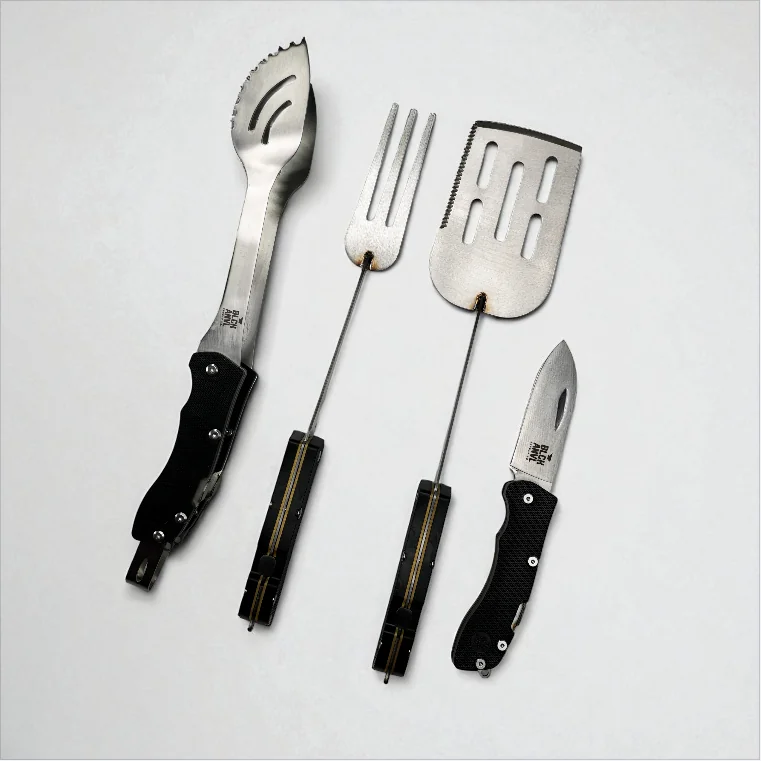
Four tools cook almost everything at camp: tongs, a spatula, a fork, and a knife. Tongs move meat and vegetables and rake coals. A spatula flips burgers and works a griddle. A fork lifts and carves large cuts. A chef's knife handles prep and slicing. Skip the plastic gas-station gear that bends the first time you press on a brisket.
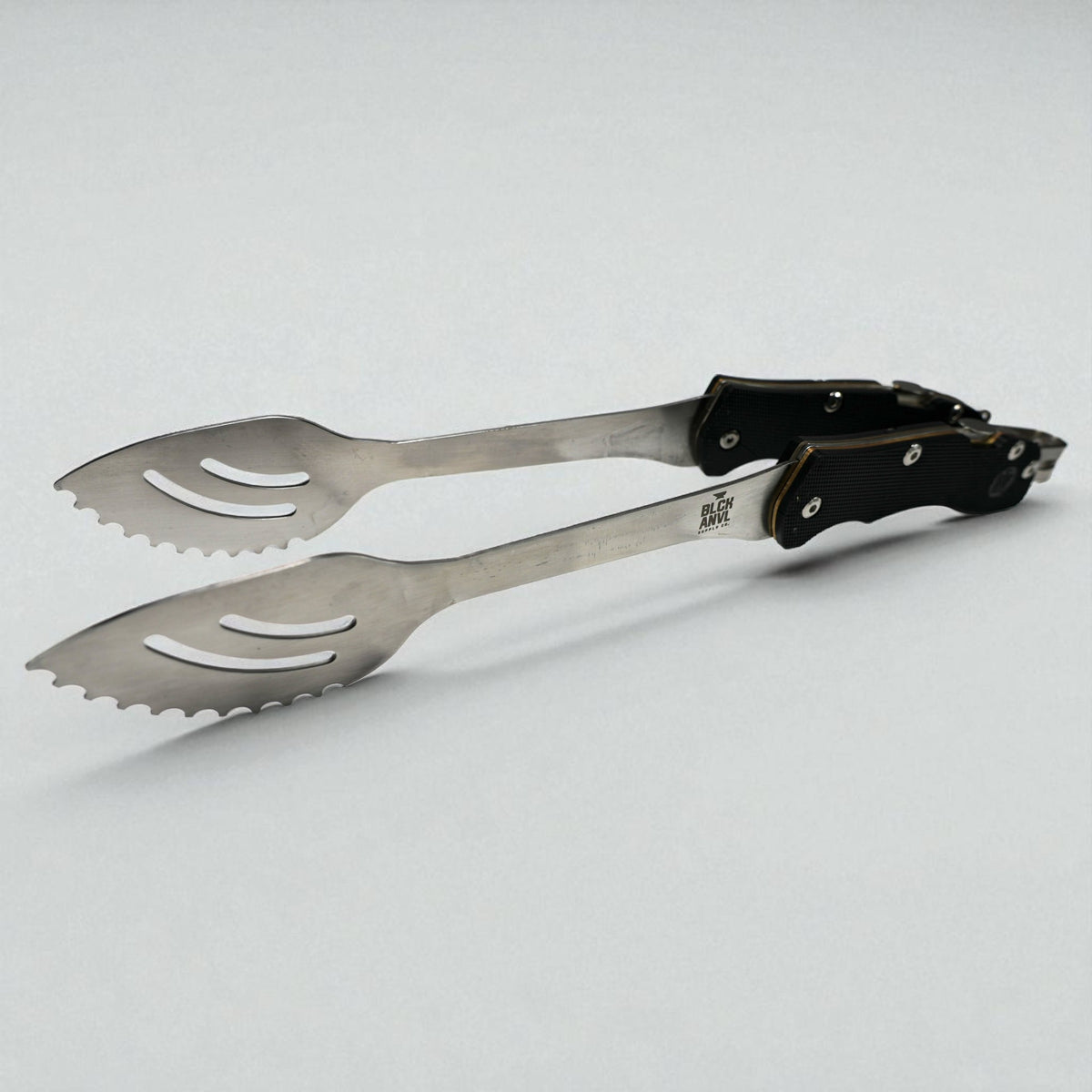
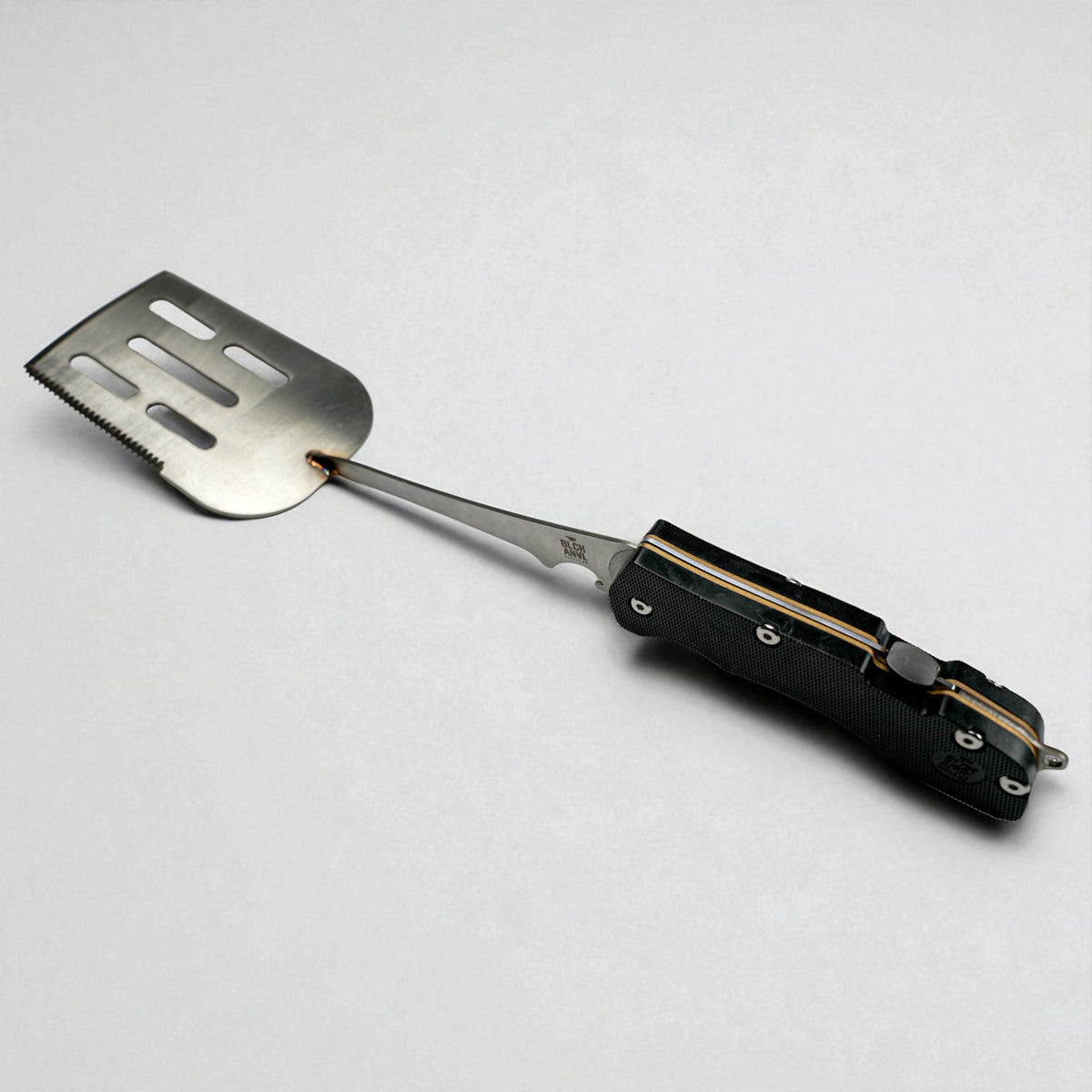
The packing problem is that most grill tools are long, rigid, and rattle loose in a bag. BLCK ANVL solves this by making tools that fold and clasp inward so a full set packs flat. The ANVL Series kit puts all four in one bundle designed for the trail. Built from exhaust-grade stainless by the engineer behind Big Gun's ATV exhaust, they hold up to real fire and abuse, and they carry a lifetime warranty. Designed in America, backed for life.
- Folding BBQ tongs
- Folding spatula
- Folding BBQ fork
- Folding chef's knife
- The ANVL Series kit (all four, packs flat)
- Instant-read meat thermometer
- Basting brush
- Small cutting knife or paring blade for prep
What cookware holds up over an open fire?
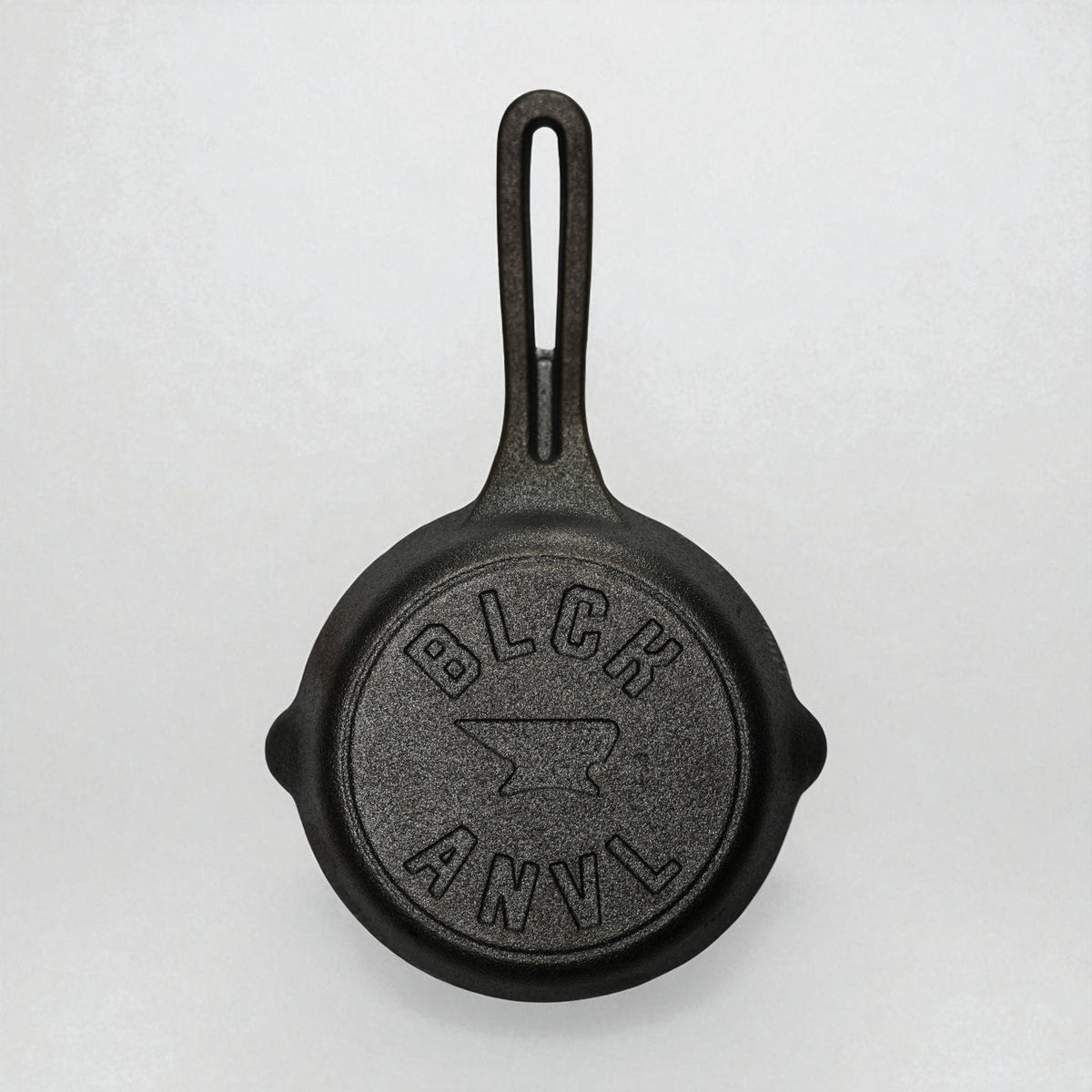
Camp cookware has to take direct heat without warping or coming apart. Cast iron is the workhorse. A cast iron pan or skillet sears steak, fries eggs, holds a bed of onions, and moves straight from coals to table. It is heavy, but it survives everything and cooks evenly. Season it before the trip and it will not stick.
Round out the kit with a pot for boiling water, coffee, and one-pot meals, plus a lid that doubles as a plate in a pinch. A folding grill grate lets you cook straight over a wood fire. Bring nesting gear when weight matters, but do not trade away a real cast iron pan. It is the piece that turns a fire into a kitchen.
- Cast iron pan or skillet
- Pot with lid for boiling and one-pot meals
- Folding or packable grill grate
- Kettle or small pot for coffee and water
- Heat-proof pot gripper or handle mitt
- Nesting bowls or plates
- Enamel mug
What prep gear should go in the bag?
Prep is where camp meals fall apart when you are missing pieces. A solid cutting board gives you a clean surface for meat and vegetables. Sealed containers keep marinated proteins cold and leakproof in the cooler, and they stop cross-contamination between raw and cooked food. Pack a few resealable bags for pre-portioned ingredients so you are not chopping onions in the dark.
Bring a small mixing bowl for rubs and marinades, a measuring approach you trust (a spoon and your eye), and clean towels. Prep at home when you can: portion the meat, mix the rub, and pack sauces in small squeeze bottles. The less cutting and measuring you do at the fire, the faster real food hits the plate.
- Cutting board
- Sealed leakproof containers
- Resealable bags for portioned ingredients
- Small mixing bowl for rubs and marinades
- Squeeze bottles for sauces and oil
- Cooler with ice or ice packs
- Clean prep towels
What do you need for cleanup at camp?
Cleanup is the part people forget until they are scraping a pan with a stick. Pack a collapsible wash bin, biodegradable soap, and a scrub brush or scraper. Heat water on your stove, wash away from any water source, and scatter the gray water well clear of camp. For cast iron, skip the soap: wipe it out, rinse with hot water, dry it over heat, and give it a light coat of oil.
Bring trash bags and pack out everything you bring in. Paper towels handle grease, and a small roll of foil doubles as a scrubber for stuck-on food. A clean setup keeps critters out of camp and means your gear is ready for the next cook instead of rusting in the bag.
- Collapsible wash bin
- Biodegradable dish soap
- Scrub brush or pan scraper
- Paper towels and clean rags
- Trash bags (pack it out)
- Small oil for re-seasoning cast iron
- Sealable bag for wet or dirty gear
What consumables run out first?
Consumables are the small stuff that makes or breaks a cook, and they are the easiest to leave behind. Cooking oil, salt, and pepper are non-negotiable. Add your rubs, a bottle of sauce, and foil for wrapping and reheating. Fuel counts here too: bring more charcoal or propane than you think one meal needs, because wind and cold burn through it faster than a backyard grill.
Round it out with the things that keep you cooking comfortably: water for drinking and cleanup, paper towels, and a lighter. Pre-mix rubs into a labeled container so you are not carrying five spice jars. Restock these after every trip so the bag is always ready to go.
- Cooking oil
- Salt and pepper
- Pre-mixed rubs and seasoning
- BBQ sauce or marinade
- Aluminum foil
- Extra charcoal or fuel
- Drinking and cleanup water
- Paper towels and lighter
The printable camp kitchen checklist
Print this and run it before every trip. Six categories, check each box, and nothing gets left in the garage. The tools line is where most kits go wrong, so lock in a folding set that packs flat before you worry about anything else.
- FIRE AND HEAT: chimney starter, charcoal or hardwood, compact stove, fuel, windproof lighter, fire gloves, folding grate
- TOOLS: folding tongs, folding spatula, folding fork, folding knife (the ANVL Series kit covers all four), meat thermometer, basting brush
- COOKWARE: cast iron pan, pot with lid, grill grate, kettle, pot gripper, mug
- PREP: cutting board, sealed containers, resealable bags, mixing bowl, squeeze bottles, cooler with ice, towels
- CLEANUP: wash bin, biodegradable soap, scrub brush, paper towels, trash bags, re-seasoning oil
- CONSUMABLES: oil, salt, pepper, rubs, sauce, foil, extra fuel, water
The gear
Tools built for this.
Common questions
What is the minimum gear to cook real food at camp?+
At a minimum you need a heat source (coals or a stove), one good pan (cast iron), a tool to move and flip food (tongs and a spatula), a knife, oil, and salt. Everything else makes the cook easier, but those pieces will get a real meal on the plate.
Why pack folding BBQ tools instead of regular grill tools?+
Standard grill tools are long, rigid, and rattle loose in a bag. Folding tools clasp inward so a full set packs flat and rides in a side pocket. On an ATV, in a truck bed, or in a backpack, that saved space is the difference between bringing your tools and leaving them home.
Are BLCK ANVL folding tools tough enough for real fire cooking?+
Yes. They are designed in America by the engineer behind Big Gun's premium ATV exhaust and built from exhaust-grade stainless steel to the tolerances of a machined exhaust part. They are made to take heat and abuse over live fire, and they carry a lifetime warranty. Manufactured overseas, backed for life.
How do you clean cast iron at camp?+
Skip the soap. Wipe out food while the pan is still warm, rinse with hot water, and use a scraper for anything stuck. Dry it fully over your heat source, then rub in a thin coat of oil before it goes back in the bag. That keeps it from rusting and ready for the next cook.
How much fuel should I bring for a camp cook?+
Bring more than a backyard cook needs. Wind and cold pull heat away fast, so plan on roughly a full chimney of charcoal per main meal plus extra, or a spare propane canister for a stove. Running out mid-cook is the most common camp kitchen mistake, and it is the cheapest one to avoid.
Keep reading
Build The Kit
Two or more pieces.
10% off your order.
Every BLCK ANVL piece is designed by the team behind Big Gun ATV exhaust. Run two or more in your cart and the discount applies on its own. No code.